Vancouver Island
Wildlife on Vancouver Island
You are extremely likely to see something. Whether it is a good encounter depends almost entirely on how far away you stay.
- 13 places on this page
- 15 towns
- 4 upcoming
Wildlife areas and parks we list
Park & Nature
Creyke Point
Sooke
4.9on GoogleRated 4.9 out of 5 on GoogleCoastal park within Roche Cove Regional Park with walking trails and picnic areas. Wildlife viewing along the trails.
Park & Nature
Qualicum National Wildlife Area Marshall-Stevenson
Qualicum Beach
4.8on GoogleRated 4.8 out of 5 on GoogleCoastal wildlife area with hiking trails and birdwatching access.
Park & Nature
Heritage Forest
Qualicum Beach
4.7on GoogleRated 4.7 out of 5 on GoogleForested park with hiking trails and picnic areas.
Park & Nature
Sooke Mountain Provincial Park
Sooke
4.7on GoogleRated 4.7 out of 5 on GoogleHiking trails and wildlife watching in a provincial park.
Beach
Rathtrevor Beach Provincial Park
Parksville
4.7on GoogleRated 4.7 out of 5 on GoogleBeachfront provincial park with nature trails and camping.
Park & Nature
Seal Bay Regional Nature Park
Comox Valley
4.7on GoogleRated 4.7 out of 5 on GoogleBeaches, hiking trails, and wildlife viewing, rated 4.7.
Park & Nature
Mack Laing Nature Park
Comox Valley
4.6on GoogleRated 4.6 out of 5 on GoogleHiking and birdwatching trails with a historic cottage.
Park & Nature
Hole In The Wall
Port Alberni
4.6on GoogleRated 4.6 out of 5 on GoogleRock formation near Port Alberni with hiking access.
Park & Nature
Burgoyne Bay Provincial Park
Salt Spring Island
4.6on GoogleRated 4.6 out of 5 on GoogleProvincial park on Salt Spring Island with beach, hiking trails, and kayaking.
What is actually here
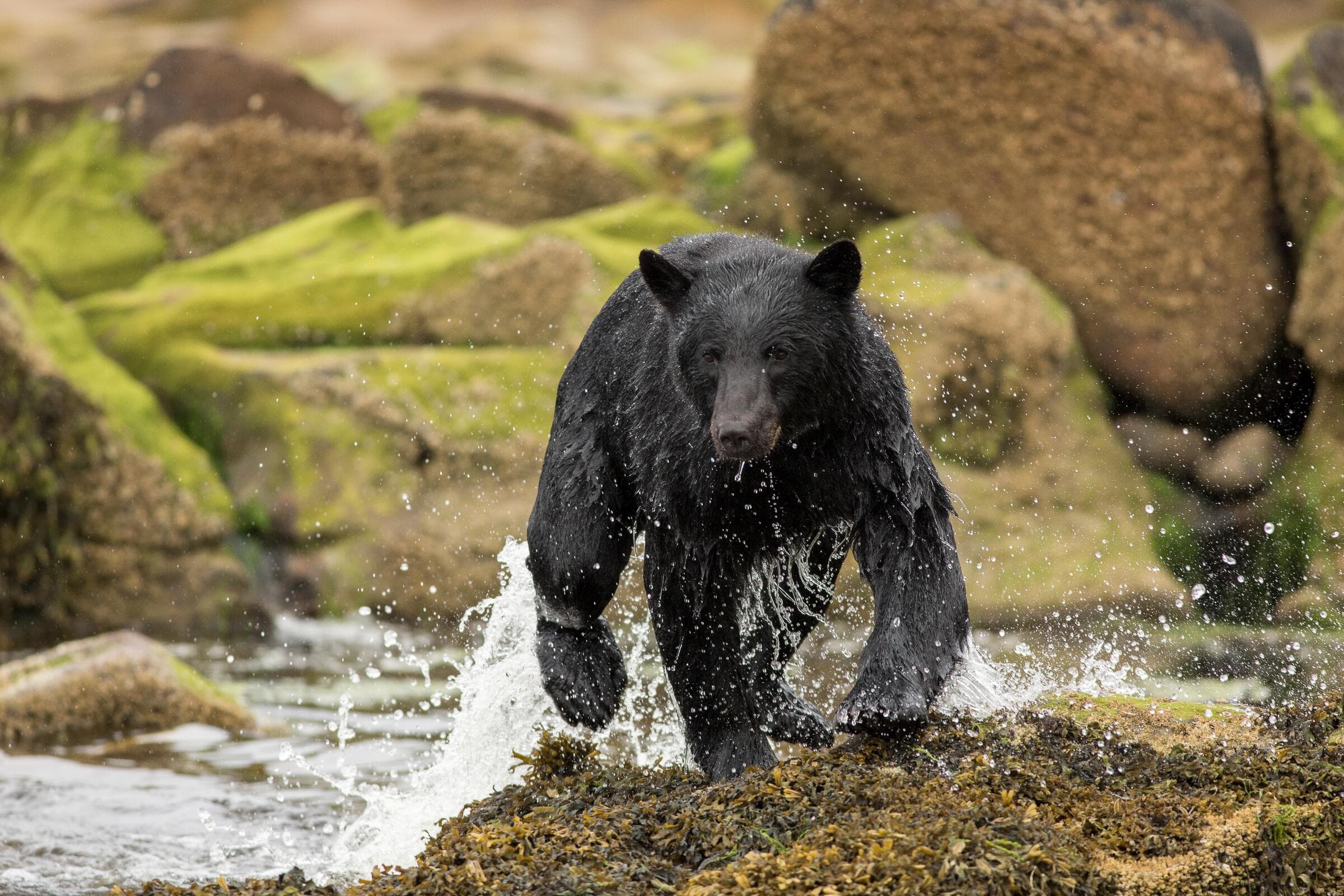
Black bears are widespread and visible from spring through autumn, concentrating on estuaries and salmon rivers in the late season. Roosevelt elk move in herds through valley bottoms. Sea lions haul out noisily through winter and spring. Bald eagles are present year-round and cluster wherever fish are running. River otters, seals, deer and raccoons are close to guaranteed.
What is not here matters too: there are no grizzly bears resident on the island, and cougars and wolves exist but are very rarely seen. Plan for bears and birds; treat anything else as a bonus.
Edges, tides and the first hour of light
Wildlife concentrates on edges — estuaries, river mouths, forest margins, the tide line. A marsh at dawn produces more than a forest trail at noon, every time. Falling tides expose feeding ground and pull birds and seals in behind them.
The two productive hours are the first after sunrise and the last before sunset. Midday in summer is the emptiest time to look, which is unfortunately when most people do.
How to watch well
- Binoculars, not a phone
- The best wildlife tool by a distance, and it keeps you at the right range.
- Dawn and dusk
- The two hours that produce almost everything. Midday is the worst time to look.
- Never feed anything
- Including birds and deer. Habituated animals end up dead, and the rule is enforced.
- Stay in the car on roadsides
- A vehicle is a hide. Getting out turns a sighting into an incident.
Estuaries, marshes and conservation areas
The productive edges — where fresh water meets salt and everything comes to feed.
Hotel & Accommodation
Cobble Wood & Bird Sanctuary Guesthouses & Suites
Tofino
4.6(48)Rated 4.6 out of 5 from 48 reviewsSelf-contained suites among West Coast cedars on half an acre, near Tofino beaches and inlet waters, backing on forested bird sanctuary preserve.
Park & Nature
S'amunu | Somenos Conservation Area
Duncan
4.6on GoogleRated 4.6 out of 5 on GoogleEducational signage marks birdwatching routes around Somenos Lake.
Park & Nature
Buttertubs Marsh Park
Nanaimo
4.6on GoogleRated 4.6 out of 5 on GoogleMarsh park with trails for birdwatching.
The distance rule is not decoration
Stay in the vehicle when watching from a road. Give bears a very wide berth and never place yourself between a sow and cubs. Never feed anything, including birds — a fed animal becomes a destroyed animal, and that is not a figure of speech in British Columbia.
If an animal changes its behaviour because of you — stops feeding, looks up, moves away — you are too close. Back off rather than reaching for a longer lens later.
Wildlife and nature events coming up
All eventsWildlife by town
Places, events and things to do, town by town.